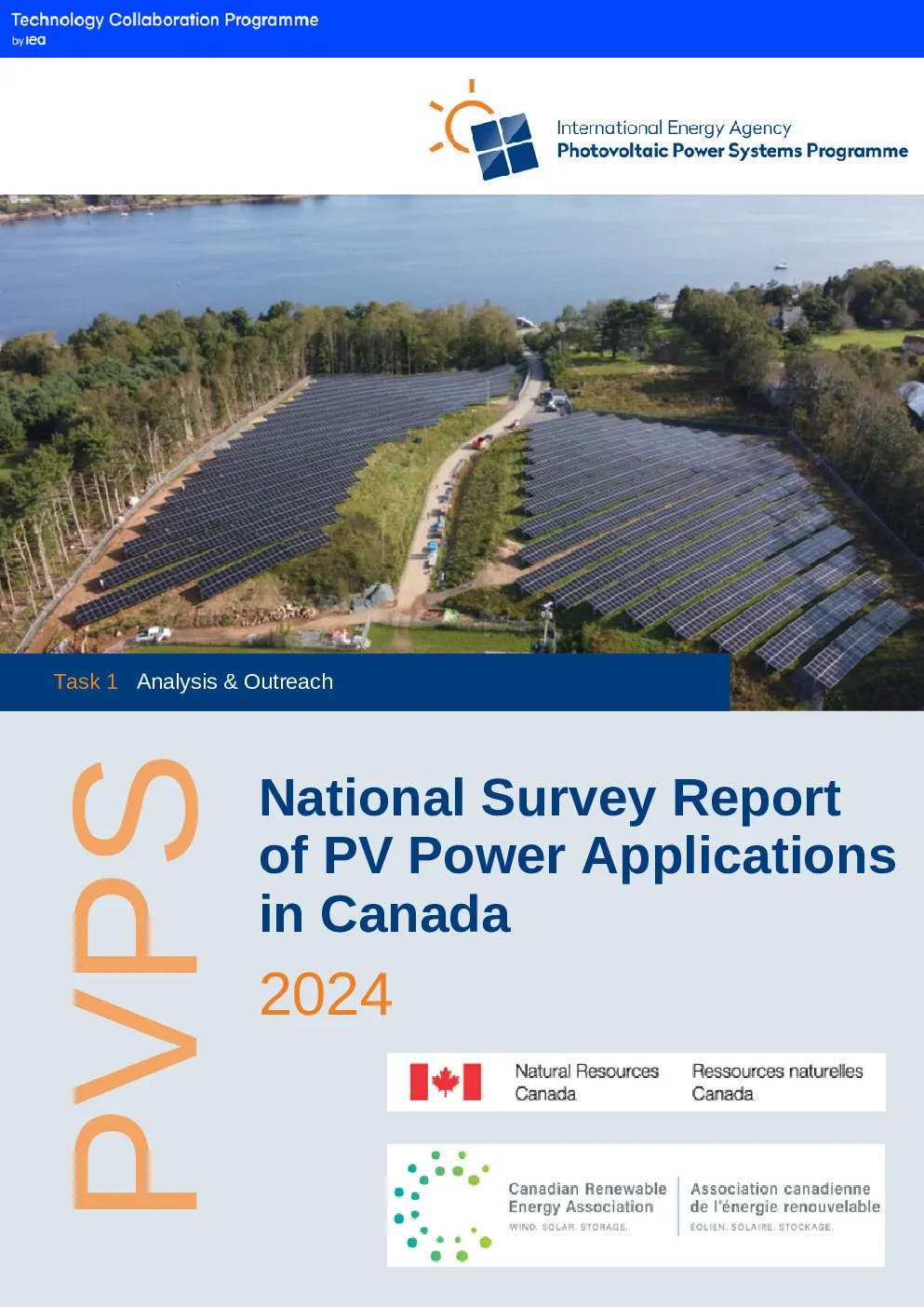
2024 What is IEA PVPS TCP? The International Energy Agency (IEA), founded in 1974, is an autonomous body within the framework of the Organization for EconomicCooperation and Development (OECD).The Technology Collaboration Programme(TCP)was created with a belief that the future of energy The IEA Photovoltaic Power Systems Programme (IEA PVPS) is one of theTCP’swithin the IEA and was established in 1993.The missionof the programme is to “enhance the international collaborative efforts which facilitate the role of photovoltaic solar energy as a cornerstonein the transition to sustainable energy systems.”Toachieve this, the Programme’s participants have undertaken a variety of joint research The 28IEA PVPS participating countries are Australia, Austria, Belgium, Canada, China, Denmark, Finland, France, Germany,India,Israel,Italy, Japan, Korea,Lithuania,Malaysia, Morocco, the Netherlands, Norway, Portugal, South Africa, Spain, Sweden, Switzerland, Thailand,Türkiye, the United Kingdomand the United States of America. The European Commission,Solar Power Europe and the SolarEnergy Visit us at:www.iea-pvps.org What is IEA PVPSTask1? The objective of Task 1 of the IEA Photovoltaic Power Systems Programme is to promote and facilitate the exchange and dissemination ofinformation on the technical, economic, environmental and social aspects of PV power systems. Task 1 activities support the broader PVPSobjectives: to contribute to cost reduction of PV power applications, to increase awareness of the potential and value of PVpower systems, Authors Main Content:ChristopherBaldus-Jeursen (Natural Resources Canada),YvesPoissant (Natural Resources Data:ChristopherBaldus-Jeursen (Natural Resources Canada),YvesPoissant (Natural Resources Canada),MathieuCôté(Canadian Renewable Energy Association),Phil McKay(Canadian Renewable Energy Analysis:ChristopherBaldus-Jeursen (Natural Resources Canada), YvesPoissant (Natural Resources DISCLAIMER TheIEAPVPSTCPisorganizedundertheauspicesoftheInternationalEnergyAgency(IEA)butisfunctionallyandlegallyautonomous. Views, findingsand publications of the IEA PVPS TCP do not necessarily represent the views or policies of the IEA Secretariat or its individualmembercountries. COPYRIGHT STATEMENT Thiscontent may be freely used, copied and redistributed, providedappropriate credit is given(please refer to the ‘Suggested Citation’). The SUGGESTED CITATION Baldus-Jeursen C., Poissant Y. (2025)National Survey Report of PV Power Applications in Canada 2024. IEA PVPS Task 1.https://iea-pvps.org/national_survey/nsr-canada-2024/ COVER PICTURE A4.8 MWcommunity-owned PV array in Mahone Bay, Nova Scotia,whichis part of the province’s Community Solar Programthatfacilitatessharedownership of PV projects.Partly funded by the Government of Canadaanddeveloped by AREA(photo credit:Goldbeck Solar). National Survey Report of PV Power IEA PVPSTask1 December–2025 DOI:10.69766/SJQX5045 Acknowledgements...........................................................................................................51Installation data.....................................................................................................6Applications for photovoltaics.....................................................................6Total PV power installed.............................................................................6Key enablers of PV development...............................................................92Competitiveness of PV electricity...........................................................................11Module prices.............................................................................................11System prices............................................................................................11Cost breakdown of PV installations............................................................13Financial parameters and specific financing programs...............................14Specific investment programs....................................................................14Additional country information....................................................................153Policy framework...................................................................................................16National targets for photovoltaics...............................................................17Direct support policies for PV installations..................................................17Self-consumption measures.......................................................................18Collective self-consumption, community solar and similar measures..........19Tenders, auctions & similar schemes.........................................................19Other utility-scale measures including floating and agricultural PVsystems.................................................................................................................19Social policies.....................