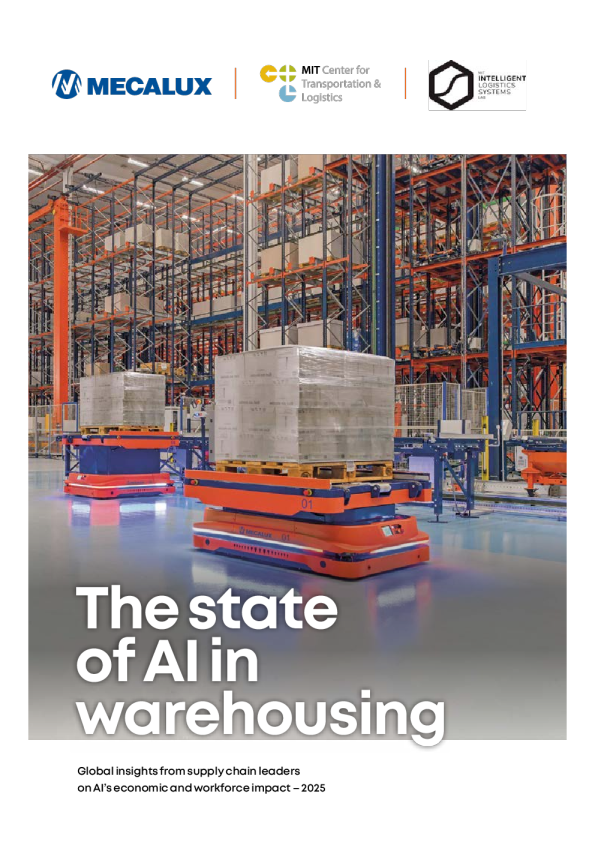
2025人工智能在仓储领域的现状
 AI智能总结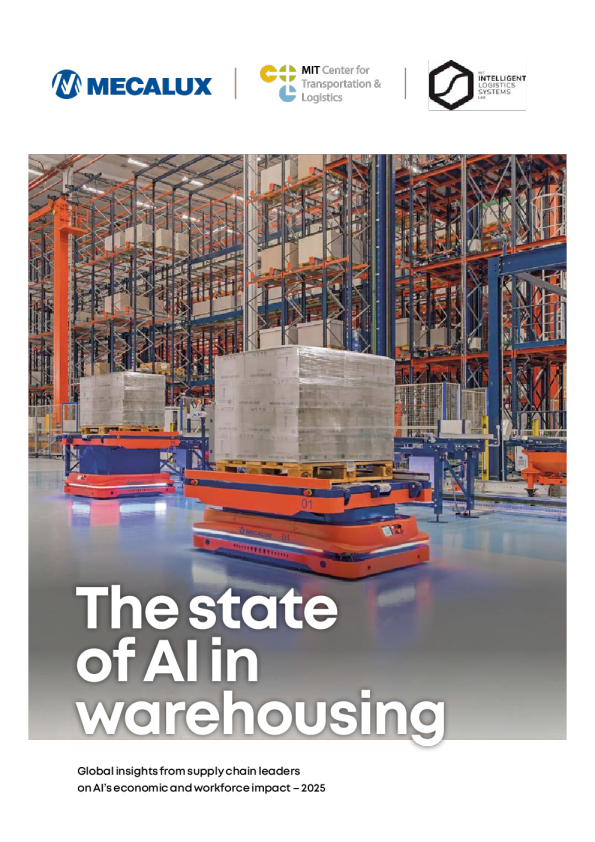
Global insights from supply chain leaderson AI’s economic and workforce impact – 2025 Contents Theme 6: Dominant methods Introduction Key findings From prediction to generation:How AI methods create value•The technologies powering today’s Theme 1: Current state of AI/ML AI adoption in warehousing reaches a •The expanding footprint of AI inwarehouse operations•AI becomes part of the daily workflow•A tool for operational complexity Synthesis across themes •Key insights and implications for AI inwarehousing Theme 2: AI/ML investment and ROIAI investments move from pilot budgets Cross-sectional analysis Regional nuances and differences •The state of warehouse automationacross countries•AI/ML budget allocation by country •Budget allocation and ROI from AI•AI investment drivers•Payback periods reflect the scope of Theme 3: Current AI/ML implementationchallenges and enablers Industry-specific differences Closing remarks Overcoming challenges to accelerate Survey methodology •Main barriers•Internal capabilities for AIimplementation Theme 4: AI/ML impact on the workforce People at the centre of warehousetransformation•AI raises skills across the board Theme 5: Future AI/ML implementationoutlook and priorities The next wave: From prediction to Aboutthe survey Year: 2025 Participants:2,000+ experienced supply chainand warehousing professionals. Reach: 21 countries across Europe, North America, Industry sectors:Agriculture, automotive,chemicals, construction, consumer goods,e-commerce & retail, energy, food & beverage, Company size: Respondents representedcompanies ranging from 100 to over 5,000employees, with the largest share coming from Revenue: Most respondents (32%) representcompanies with annual revenues between$251–999 million, followed by 26% in the$51–250 million range, 19% above $1 billion, 18%between $10–50 million, and 5% under $10 million. IntroductionA data-driven viewof AI adoption in The MIT Intelligent Logistics Systems Lab and Mecalux jointly fielded a global survey ofmore than 2,000 experienced supply chain and warehousing professionals to assess thecurrent state, investment patterns, challenges, workforce effects and outlook for artificialintelligence and machine learning (AI/ML) in warehouse operations. To ensure the findingsreflected organisations with meaningful levels of warehouse activity and technology The data reveal a sector in transformation. More than four out of five organisationsincreased AI/ML use in the past year, and most expect budgets to rise further. The typicalpayback period — just two to three years — shows that AI is delivering tangible returns, notspeculative value. Generative AI is emerging as the next frontier in logistics, speeding up Warehousing is evolving from automation to intelligence, where data and algorithmscomplement human expertise. The next competitive edge will belong to those who treat AI Theme 4: Key findings AI/ML impacton the workforce • Positive workforce trends dominate:productivity up for77.5%oforganisations, job satisfaction up for75.4%, training requirements up for Theme 1:Current state of AI/MLadoption • AI is creating — not replacing — jobs:AI/ML engineers (60.1%), automationspecialists (58%), process-improvement experts (51.9%) and •Nearly 9 out of 10warehouses nowoperate at automation levels beyond •57.5%of organisations operateat advanced or full automation Future AI/MLimplementation outlook •Full automation is most commonamong larger firms with higher •92.1%of firms are implementingor planning AI projects in the nearterm. Only1.7%have no plans;6.2%already have extensive Theme 2: AI/ML investmentand ROI •87%expect to increase AI budgets inthe next 2–3 years (50.3%slight,36.7%significant). • Most companies dedicate11–30%of warehouse-tech budgetsto AI/ML. • Main investment goals: efficiency(47.9%) and innovation (31.1%),followed by cost reduction (10.5%) • Typical payback period:2–3 years.• Main investment drivers: costsavings, customer needs, labouravailability, quality, safety, Theme 6:Dominant methods • Most valuable methods today:generative AI (70.3%), predictiveML (58.4%), computer vision (49.8%),reinforcement learning (45.9%) and Theme 3:Current AI/MLimplementation • Top generative AI applications:automated documentation/reporting (55%), layout optimisation • Top adoption barriers: technicalexpertise (48.6%), system integration(47.7%), data quality (46.2%) and • Key enablers for faster adoption:better tools/platforms (55.5%), moreinternal expertise (53.7%), largerbudgets (51.9%), clear roadmaps Theme 1: Current state of AI/ML adoption AI adoption in warehousingreaches a new level of maturity The expanding footprint of AI in warehouse operations Our results show that AI/ML adoption in warehousing is already well underway and expandingrapidly. Nearly 9 out of 10 warehouses now operate at automation levels beyond basic processes,while about 6 out of 10 report having implemented some fo