儿童营养不良的水平和趋势:儿童基金会/世界卫生组织/世界银行集团儿童营养不良联合估计数:2025年版的主要结论
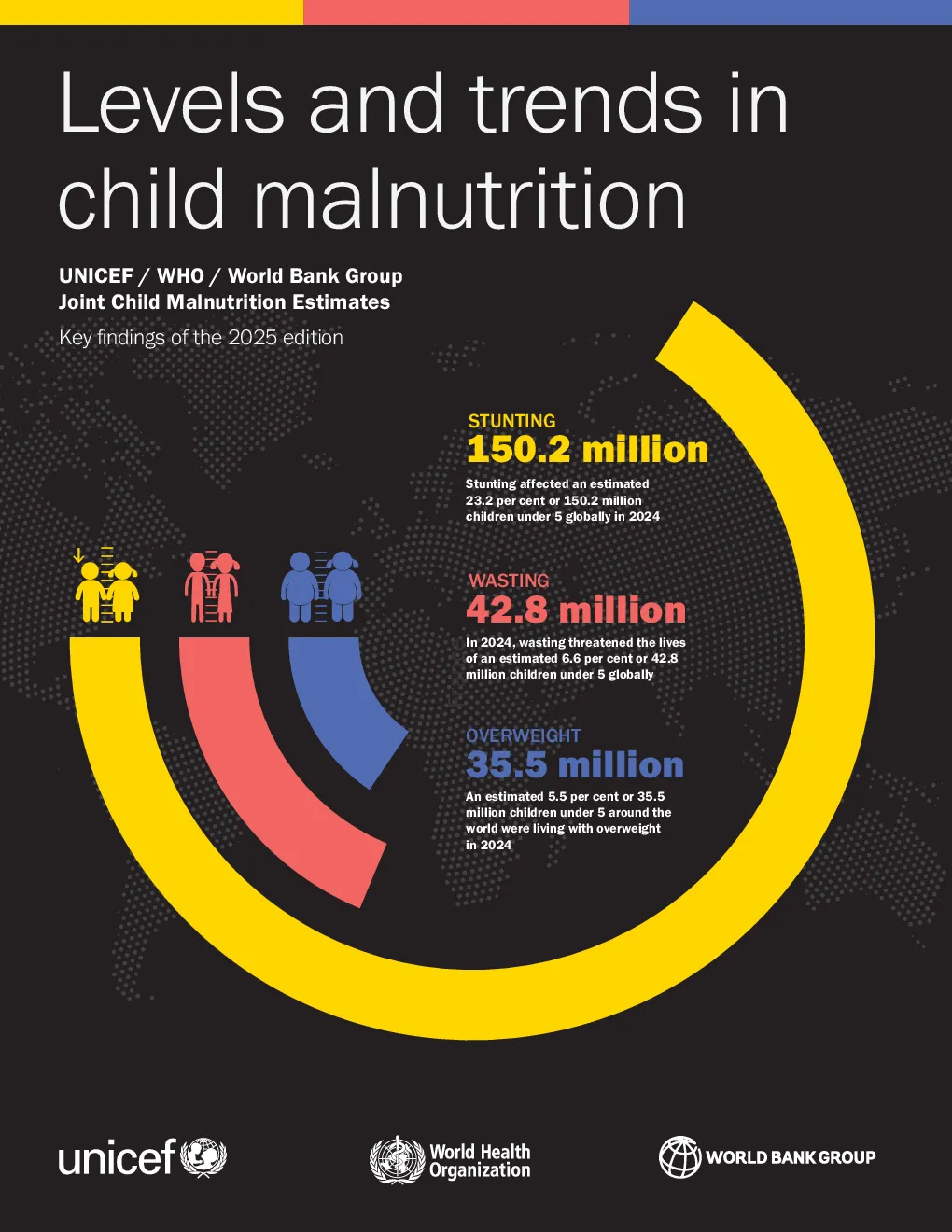
UNICEF / WHO / World Bank GroupJoint Child Malnutrition EstimatesKey findings of the 2025 edition 150.2 million Stunting affected an estimated23.2 per cent or 150.2 millionchildren under 5 globally in 2024 WASTING42.8 million In 2024, wasting threatened the livesof an estimated 6.6 per cent or 42.8million children under 5 globally OVERWEIGHT35.5 million An estimated 5.5 per cent or 35.5million children under 5 around theworld were living with overweightin 2024 The new Joint Child Malnutrition Estimates of 2025 supersede former analyses and resultspublished by UNICEF, WHO and the World Bank Group INTRODUCTIONSLIPPING PROGRESS ON STUNTING THREATENS GLOBALGAINS IN REDUCING CHILD MALNUTRITION In some regions, demographic shifts arecontributing to a decline in the overallnumber of malnourished children, whileother regions are not benefiting fromdemographic change. This unevenprogress underscores the complexity ofaddressing child malnutrition globally andthe importance of country-led efforts togive every child access to the nutritiousdiets, essential services and positive carepractices they need to survive and thrive. Malnutrition is a violation of children’srights, while good nutrition sets children onthe path to grow, develop, learn and reachtheir full potential. Despite significantprogress over the past two decades, theUNICEF, WHO, World Bank global andregional child malnutrition estimatesreveal that we are still far from a worldwithout malnutrition. number of cases that occur throughoutthe year. Across the globe, childhood overweightand obesity are rising threats to children’snutrition. There are now 35.5 millionchildren living with overweight globally,an increase of 2.4 million since 2000.The emergence of overweight andobesity has been shaped by harmful foodenvironments, including industry marketingand greater access to processed foodsalong with lower levels of physical activity. The joint estimates, published in 2025,cover indicators of stunting, wasting,severe wasting and overweight amongchildren under 5. Globally, there are150.2 million children under 5 affectedby stunting. These children begin theirlives at a marked disadvantage: they maynever attain their full possible height andtheir brains may never develop to their fullcognitive potential. Improving children’s nutrition requireseffective and sustained multisystemsefforts – driven by robust data on thenutrition situation – to prevent malnutritionbefore it starts and ensure early detectionand treatment when prevention falls short.However, prior to the reduction of financialresources in development aid in 2025, adecrease in the availability of monitoringdata for child malnutrition was notedcorresponding with the period of COVID-19pandemic, economic crises and theconflicts in Ukraine and the Middle East.An absence of data undermines informedanalysis and increases uncertainty aboutnational progress towards reducing childmalnutrition. Regular data collectionis critical to monitor and analysecountry, regional and global progressgoing forward. The Sustainable Development Goals(SDGs) set ambitious targets foreliminating child malnutrition in all itsforms. The world has made importantprogress towards these targets, includingdeclines in child stunting that havecontinued for more than two decades.However, the JME reveals that thisprogress is insufficient to achieve theSDG targets by 2030. There are also 42.8 million children under5 suffering from wasting, of which 12.2million have severe wasting. Children withwasting have weakened immunity, aresusceptible to long term developmentaldelays, and face an increased risk ofdeath, particularly when wasting issevere. The number of children affectedby wasting and severe wasting reportedby the Joint Child Malnutrition Estimates(JME) are prevalence-based estimatespredominantly based on survey data.These estimates should be consideredan underestimate of the annual burdenas they do not account for the cumulative Recent trends indicate a potential rise instunting that puts the last two decades ofprogress at risk. While stunting trends areconcerning, a trend towards declining childwasting signals progress in addressingthe immediate causes of malnutrition.Rates of child overweight have remainedunchanged over time, highlighting the needfor more effective strategies to improvechildren’s food environments. Defining the forms of malnutrition* highlighted in this key findings report Stuntingrefers to a child who is too short forhis or her age. Children affected by stuntingcan suffer severe irreversible physical andcognitive damage that accompanies stuntedgrowth. The devastating consequences ofstunting can last a lifetime and even affectthe next generation. Overweightrefers to a child who is too heavyfor his or her height. This form of malnutritionresults when energy intakes from foodand beverages exceed children’s energyrequirements. Overweight increases the riskof diet-related noncommunicable diseaseslater in li