AI智能总结
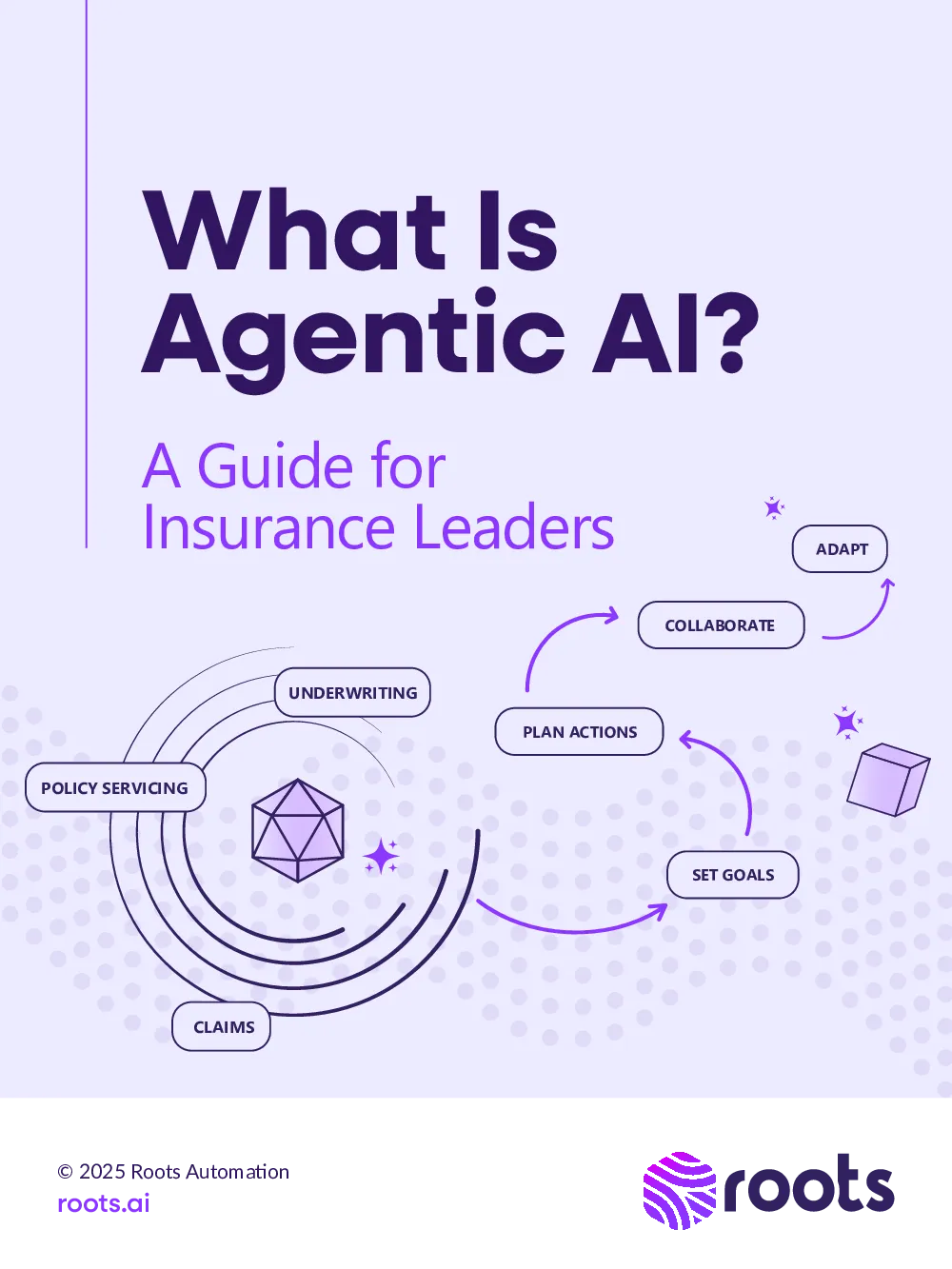
A Guide forInsurance Leaders Table ofContents Understanding Agentic AIAgentic AI in Insurance OperationsBenefits of Agentic AI for InsurersKey Challenges and ConsiderationsAgentic AI Governance and Best PracticesFuture Outlook for Agentic AI in Insurance040706091011 Artificial intelligence (AI) has rapidlyevolved from a promising technologyto a business necessity in the insurancesector. Early AI applications focused on automating repetitivetasks, such as data entry and document processing,delivering incremental efficiency gains. Today, as insurersface rising customer expectations, complex regulatorydemands, and mounting competition, the need for moresophisticated, autonomous solutions has emerged. Agentic AI represents the next frontier in insurancetechnology. Unlike traditional AI tools that requirehuman direction for each task, agentic AI systems canindependently plan, execute, and adapt to achievebusiness goals. This guide explores agentic AI—what itis, how it differs from earlier AI approaches, and why it ispoised to transform underwriting, claims management,and policy servicing across the insurance industry. UnderstandingAgentic AI Defining Agentic AI: What Sets It Apart? Agentic AI refers to artificialintelligence systems designedto act as autonomous agents. Employing advanced algorithms andmachine learning enables insurers toanalyze data more efficiently, predictoutcomes, and automate decision-makingprocesses. As a result, agentic AI systemscan perceive their environment, makedecisions, and take actions to achievespecific objectives—often with minimalhuman intervention. In contrast to rule-based automation or predictive analytics,agentic AI can: •Set goals and planactions based on businessobjectives.•Adapt dynamically to newinformation or changing conditions.•Collaborate with humans and othersystems to solve complex problems. This level of autonomy distinguishes agentic AI from earlier forms of AI, such asrobotic process automation (RPA) or machine learning models that require explicitinstructions or operate within narrow, predefined parameters. Key Characteristics and Capabilities Agentic AI systems are defined by their corecapabilities, which include: Goal-OrientedBehavior: AutonomousExecution: ContextAwareness: ContinuousLearning: They interpretdata, events, anduser intent to makeinformed decisions. Through feedbackand new data,agentic AI improvesperformance overtime. Agents can initiateactions, monitorresults, and adjusttheir approach asneeded. Agents areprogrammed topursue outcomes,not just executetasks. Traditional AIvsAgentic AI in Insurance In an insurance context, this means agentic AI can move beyond basic automation toenable dynamic and responsive underwriting, proactive claims handling, and a far greaterdegree of personalized customer service. CLAIMS EXAMPLE Agentic AI: From Present State to Future State AI agents are rapidly evolving—from simple systems that follow hard-coded rules tointelligent agents capable of autonomous reasoning and adaptive decision-making.This progression highlights how AI is shifting from task-based execution to moredynamic, goal-driven interaction with its environment. AI Assistant Uses an LLM to extract data from a document, then uses hard-codedrules to index •Goal-directed:Yes (extract and index)•Autonomous reasoning:No (follows fixed logic)•Adaptability:Low•Environment interaction:Minimal (does not “think” beyond rules) Agentic AI Uses an LLM to extract data from a document, then queries a claim filedatabase to find where it belongs •Goal-directed:Yes•Autonomous reasoning:Yes (makes judgements by querying)•Adaptability:Medium/High (can work with changing data or logic)•Environment interaction:Yes (queries a system, interprets results) Most Agentic AI Organize all unindexed documents in the systemand improve the indexing workflow going forward •Goal-directed:Yes•Autonomous reasoning:Yes•Adaptability:High•Environment interaction:High Agentic AIin Insurance Operations Agentic AI is reshaping insurance operations by enabling intelligent, goal-drivenautomation across key functions—from underwriting to claims management and policyservicing—enhancing efficiency, accuracy, and customer experience at scale. Underwriting:Accelerating riskassessment anddecisioning Claims ManagementAutomating complexworkflows Agentic AI can streamlineunderwriting by autonomouslygathering data from multiplesources (e.g., public records,IoT devices, claims history),analyzing risk profiles, andrecommending or even issuing In claims, agentic AI can intakeFNOL (First Notice of Loss),verify coverage, assess damagesusing images or sensor data, andcommunicate with policyholders—Policy Servicing:all while escalatingonly truly ambiguousor high-risk cases tohuman adjusters. Thisreduces cycle times,improves accuracy, andenhances customersatisfaction. policies. Agentscan flag anomalies,suggest additionalinformation requests,and continuously learnfrom underwri