2016-2020年全球经济展望
 AI智能总结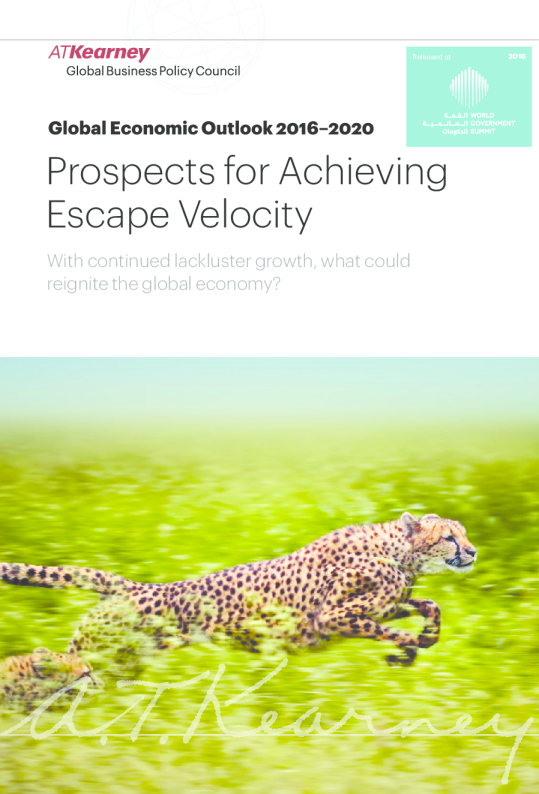
“The whole world,” wroteFinancial Timesairs columnist Gideon Rachman in theHe is absolutely right. Rachman pointed to a “generalized anxiety”that extends to all the world’s major powers (with the partial exception of India)—a pronounceddeparture from a long period in which at least one global power had been “bullishly optimistic.”and economic—helps explain what Rachman calls the “global gloom” that has descended on us.To be sure, an anemic global economy and continued uncertainty contributed to the state ofto uncertainties in the nature of the global economy itself. Can we expect the global economyto “snap back” to the pre-Great Recession trajectory of rapid globalization, or have we enteredinto a post-globalization period marked by renewed geopolitical tensions, the rise of politicalextremism, and flat-line economic growth? Will emerging markets recover the meteoric growthrates of years past, or are they doomed to a pronounced period of lower economic dynamism?of “exponential” technologies, or have we arrived at aprotracted period of declining productivity growth? How long will the current commodity slumpcycle persist? How well prepared are governments to deal with future economic or financialshocks? These and other major questions certainly cast a long shadow over any attempt toforecast global economic trends.Sixteen years ago, eminent British sociologist and academic Anthony Giddens published a com-pelling book entitledRunaway World: How Globalization is Reshaping Our Lives. His overarchingconclusion? “We shall never be able to become the masters of our own history,” wrote Giddens,“but we can and must find ways of bringing our runaway world to heel.” Less than a generationerent from andconclusion applies. Both the immediate and longer-range outlooks depend heavily on ourcapacity to address important structural questions.ThisGlobal Economic Outlookaddresses the short- and longer-range issues that are shaping—envisions what conditions might serve to lift the current “global gloom”—what elements mightenable the global economy to finally achieve the “escape-velocity” conditions of the pre-GreatRecession period.Erik R. PetersonManaging Director, Global Business Policy CouncilPartner, A.T. Kearney1Gideon Rachman, “Battered, Bruised and Jumpy—The Whole World Is On Edge,”Financial TimesProspects for AchieAuthorsErik Peterson,partner and managingdirector of the Global Business PolicyCouncil, Washington, D.C.erik.peterson@atkearney.comPaul Laudicina,partemeritus of A.T. Kearnof the Global BusinesWashington, D.C.paul.laudicina@atkeawill be considerable variation at the country and regional levels. Developed mabe among the primary growth markets for multinational firms in the near to meHowever, many opportunities for sales and investment exist in emerging markimportant for business leaders to be selective in which emerging markets theyopportunities, as structural economic growth models and the policy agenda dand will translate into winning and losing economies.There are risks to the global economic outlook on both the upside and downsidleaders should monitor in order to anticipate changes in the growth trajectoriesthat are key for their businesses. Downside risks include financial instability inmarkets due to U.S. interest rate hikes, global terrorism disrupting business opdamaging business and consumer confidence, and yet another resumption ofcrisis. Upside risks include quicker than expected growth in the eurozone, suctural reform agenda implementation in Japan, China, and India, and additionalworldwide consumer spending due to lower oil prices.While the five key opportunities for global growth identified above may not belikely to occur, each represents further dramatic upside risk for the global econbusiness operating environment—particularly if all five of them occur togetheropportunities for global growth will be easy to achieve, however, as they all reqand visionary leadership among both policy makers and business executives. Wnecessary in order for the global economy to achieve escape velocity is for bothe complacency that risks stigrowth and instead work together to make the necessary investments and refostronger and more resilient global growth.About the Global Business Policy Councilleaders worldwide anticipate and plan for the future. Through strategic advisory services, regulworld-class global meetings, the Council is committed to engaging in thoughtful discussion antrends that shape business and government around the globe.rey, and Jiwon Jucontributions to this report. Executive Summary••The Global Business Policy Council (GBPC) sees four key characteristics shaping the globaleconomy: the continued resource slump cycle, U.S. economic resurgence, weak productivitygrowth, and a hiatus in globalization. The first two are mixed but may on balance be positive forthe world economy, while the latter two are weighing on the prospects for stronger growth.•The uptick in the global economic outlook is largely att