政府服务论坛
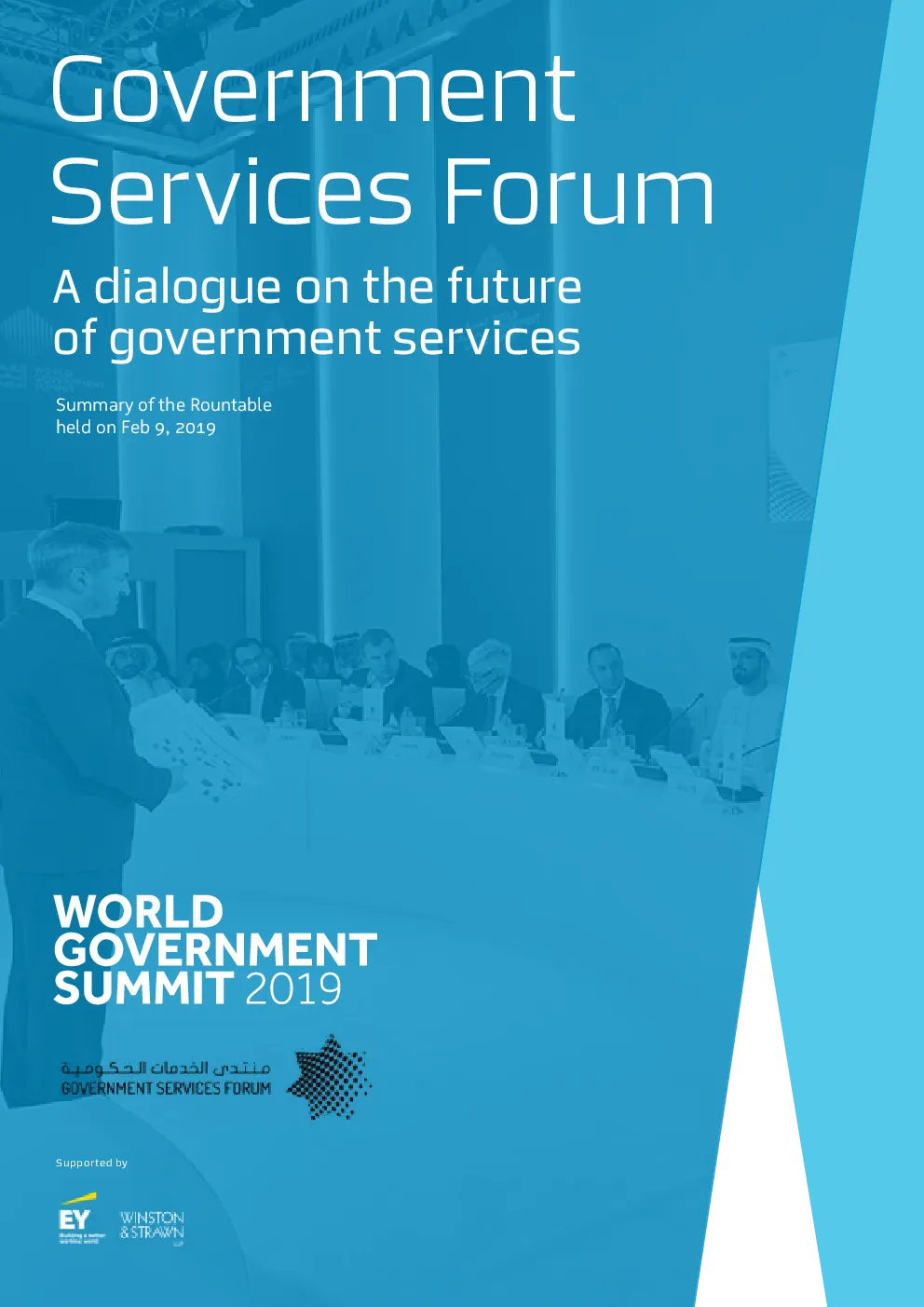
The World Government Summit is a global platform dedicated toshaping the future of governments worldwide. Each year, the Summitsets the agenda for the next generation of governments with a focuson how they can harness innovation and technology to solve universalchallenges facing humanity.The World Government Summit is a knowledge exchange center at theintersection of government, futurism, technology, and innovation. Itfunctions as a thought leadership platform and networking hub forpolicymakers, experts and pioneers in human development.The Summit is a gateway to the future as it functions as the stage foranalysis of future trends, concerns, and opportunities facing humanity.It is also an arena to showcase innovations, best practice, and smartsolutions to inspire creativity to tackle these future challenges.AnsweringTomorrow’sQuestionsToday The future of servicedelivery needs to belooked at in the contextof the future. It soundsobvious, but don’t designwith only today in mind.And be careful not tobase your assumptionsabout future experienceneeds on an assessmentof the current state. IntroductionThe inaugural Government Services Forum tookplace on 9 February 2019, at this year’s WorldGovernment Summit. Launched by the EmiratesGovernment Service Excellence Program andsupported by EY and Winston & Strawn, a panelof distinguished attendees discussed the futureof government services, collaboration, and howto establish a shared vision for digitally-engagedcustomers.ThemesGovernmentServices ForumAddressingradical shiftin citizenexpectationsChallengesin deliveringcitizen centricservices Future ofgovernmentservices Assistant Director General for Government ServicesSector at the Prime Minister’s Office in the Ministry ofCabinet Affairs and the Future, UAECEO, Public Group International Ltd.PanelistsH.E Mohammed Bin TaliahDaniel KorskiUNESCO Chair in ICT4D, Royal Holloway, University ofLondonTim Unwin Global Leader, Government and Public Sector, EYSecretary to The Chief Minister, State of Chhattisgarh,IndiaHead of Blockchain Projects, Government ofNetherlandsGuarev DwivediMarloes PompConsultant and Professor, City of Palo Alto, USAJonathan Reichental City Council Member, City of Menlo Park, USAChairman, State Agency for Public Service and SocialInnovations, Republic of AzerbaijanCatherine CarltonH.E Ulvi MehdiyevCEO, Institute for Excellence in Government, USAJane Wisemanv Technology Futurist, FUTURACYGovernment CIO, Republic of EstoniaSiim SikkutModerator Recognition of paradigm shifts incustomer expectationsThe levels of service afforded to people all over theworld today would have seemed like science fictiona generation ago. But the combination of smart-phones, sophisticated apps and always-on internetconnectivity has created an environment wherealmostanything you want is almost only a click,a tap or a swipe away. The panel reflected on thefact thatnice-to-haves have become must-haveswhile value-added services have become hygienefactors. In short, expectations are higher than everand show no sign of declining.And, these attitudes are no longer just somethingfor private enterprise to grapple with. There hasbeen a shift in the relationship dynamic where cus-tomers and governments are concerned.Govern-ments are no longer just a source of information.Instead, they are multifaceted arbiters of help,advice, services and solutions.The panel agreedthat today’s digital customers expect to be able totransact fully with their governments.Has e-government developed to regard citizensholistically?Too often, it has not. Customers mayhave to engage in multiple separate conversationswith different entities to receive help for just oneaspect of their lives. When technology is deployedin silos, it may meet the needs of that departmentor agency, but sometimes this happens at the ex-pense of user satisfaction. Perhapsit’s time gov-ernment services were re-engineered as ‘citizenservices’to ensure a customer-centric outlook isalways top-of-mind. That calls for an assessmentof what customers need, followed by the building ofthose services using the right technology.The first session explored the implications ofchanging customer expectations on governmentservices. Reimagining the customer experiencewith a “government for me” model emerged as thekey theme of the discussion.Future Citizen Now Convenience, Experience andPersonalizationYoung and old alike have complex, but differingneeds where governments are concerned. It mightbe securing a place at university, applying for fund-ing or benefits, getting a hospital appointment, orapplying for a passport. Or, it could be connectedto life’s major milestone events – birth, marriage,death. Whatever the need, if governmentportalscan’t offer real value and frictionless transactions,they will become a barrier to fulfilment.Customers expect to be treated like individuals andto feel valued. It’s what happens when they trans-act with the new generation of digital business,after all. Government