政府如何加速数字健康的价值
 AI智能总结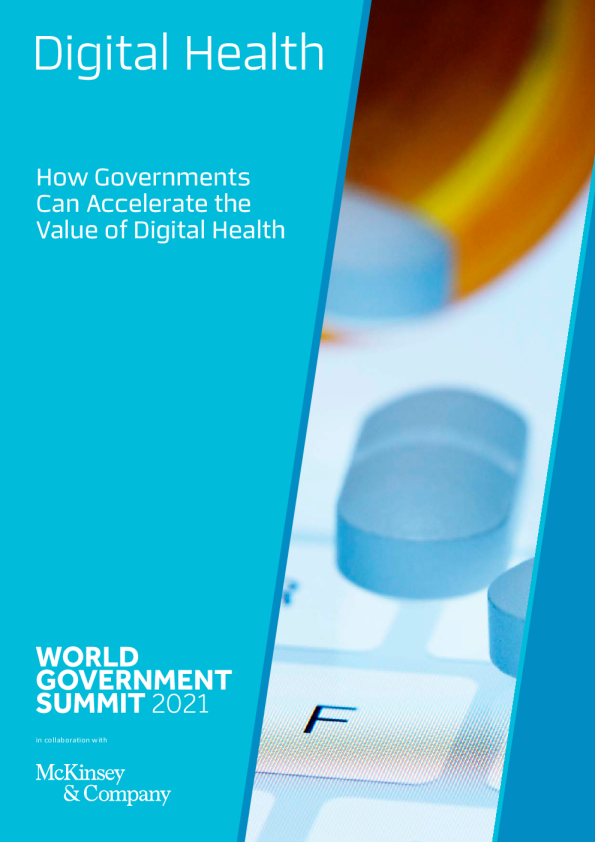
The World Government Summit is a global platform dedicated toshaping the future of governments worldwide. Each year, the Summitsets the agenda for the next generation of governments, with a focuson how they can harness innovation and technology to solve universalchallenges facing humanity.The World Government Summit is a knowledge exchange center atthe intersection of government, futurism, technology, and innovation.It functions as a thought leadership platform and networking hub forpolicymakers, experts and pioneers in human development.The Summit is a gateway to the future as it functions as the stage foranalysis of future trends, concerns, and opportunities facing humanity.It is also an arena to showcase innovations, best practice, and smartsolutions to inspire creativity to tackle future challenges.AnsweringTomorrow’sQuestionsTodayWorld Government Summit Table of ContentsTopicsIntroductionSection 1:Why the adoption of digital health isattractive for governmentsSection 2:How digital health is likely to evolveSection 3:Six ways governments can acceleratethe value of digital healthTechnical appendix 0506091220 World Government SummitDigital healthtechnologies, such aspatient telemedicine,online pharmacies, andwearables, increased inimportance during theCOVID-19 pandemic. Thatboost has helped digitalhealth become betteraccepted by consumers,patients, and practitioners. This is of crucial significance given that the healthcaresector has lagged in digital adoption.A recent McKinseyGlobal Institute study found that the healthcareindustry was in the bottom three of 20 sectors in itsdigital advancement, in all three dimensions of labor,assets, and transactions.weak in its use of digital for patient interactions.1Which Industries Are the Most Digital (and Why)?(2020, September 14). Harvard Business Review.2Patients Seek Better Exchange of Health Data Among Their Care Providers.(2020, March 17). The Pew Charitable Trusts.3Grand View Research global digital health market sizing report 2020But attitudes to digital health are rapidly changing, unlocking an estimated$10 billion marketacross the Middle East over the next five years and $230 billion globally.3Digital health is likely toincrease in importance in the coming years. Governments have a role to play in the degree and speedwith which digital technologies are adopted and can enable or hinder progress.We have seen examples of governments accelerating the advance of digital health. For instance,Australia developed a My Health Record for all Australians as part of its National Digital HealthStrategy. The United Kingdom has expanded prescription deliveries and telemedicine with bodiessuch as NHSX and National Health Service (NHS) Digital that have partnered with private sectorplayers like Babylon Health. Other government bodies encouraging digital health include theMassachusetts Innovation Fund in the United States of America and the National Health InnovationCenter in Singapore.However, there are also circumstances that are hindering the progress of digital health initiatives.These include nonexistent digital health laws, ambiguous existing laws, limited reimbursementterms, and a lack of regulations governing what may occur online related to digital health.This paper considers three key questions: 1) Why the adoption of digital health is attractive forgovernments; 2) How digital health is likely to evolve; and 3) Innovations that governments canundertake to realize its benefits more quickly.Introduction 1,2Healthcare was especially Section 1:Why the adoption of digital healthis attractive for governments4See Technical Appendix5World Bank & World Health Organization press release in 20206See Technical Appendix for calculation details7https://www.who.int/hrh/resources/global_strategy_workforce2030_14_print.pdf8McKinsey Global Institue Future of Work in Healthcare XX9McKinsey health consumer sentiment survey 2020, United Arab Emirates and Saudi Arabia10McKinsey health COVID-19 survey 2020, United States11McKinsey Global Institute: How medtech industry can capture value from digital health:https://www.mckinsey.com/industries/pharmaceuticals-and-medical-products/our-insights/how-the-medtech-industry-can-capture-value-from-digital-healthDigital health solutions can address some of the keychallenges in the healthcare sector. First, there areinequities in healthcare access between and withincountries. According to the World Bank and the WorldHealth Organization (WHO), half the world’s populationhas no access to essential care services5. Telemedicineand remote care solutions offer a means to reach ruralcommunities and underserved populations. Second,healthcare system costs are rising. Government healthcareexpenditures increased 4 percent per annum for the last 10years, part of which was avoidable. For example, 2 percentof health system costs could have been avoided withproper triaging and 5 to 10 percent with good medicationadherence6.Digital health solutions such as