更新与重启:英格兰和威尔士疫情后监狱数字化
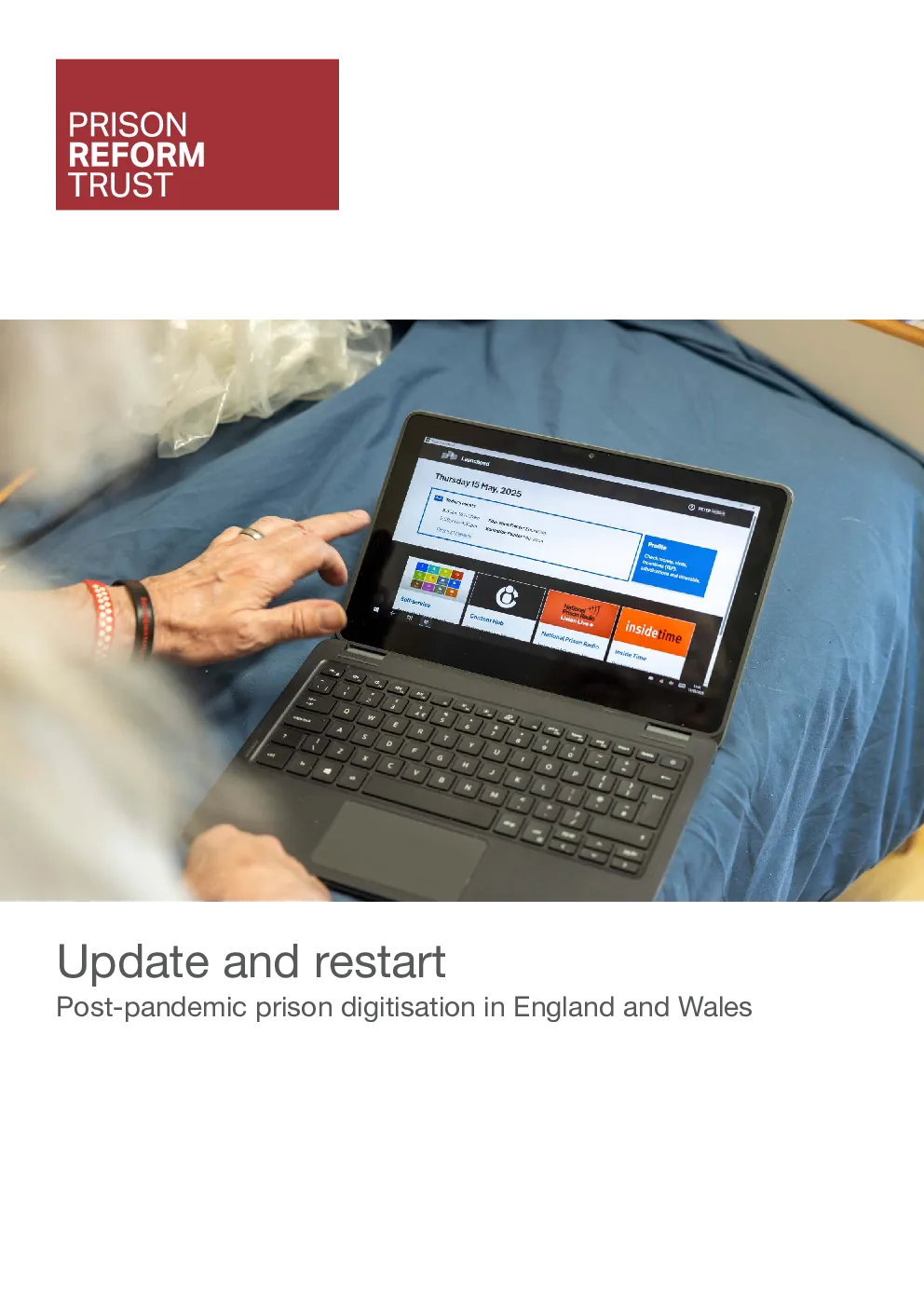
Post-pandemic prison digitisation in England and Wales Acknowledgements The authors would like to thank the people who generously informed this report, drawing on their expertiseand personal experiences. Their contributions helped to show how digital technology is currently beingused in prisons and provided innovative ideas about what more can be done. We thank the expertswho gave us their time to inform this report about developments in other jurisdictions, including theNetherlands, Belgium, Germany, and the USA. We are grateful to the prison governors who facilitated our site visits to prisons in England and Wales,and Guernsey. We were also helped by partners in the voluntary sector, including St Giles Trust, WorkingChance, Children Heard and Seen, Families Outside, NEPACS, and the Centre for Crime and JusticeStudies. We thank Professor Victoria Knight, who provided ongoing advice as we conducted the study, and gavehelpful feedback on an early draft of this report. The report is vastly improved thanks to her insights.However, we are responsible for any errors made. We are also grateful to the HMPPS digital team for their thoughtful engagement and commentary on thereport, as well as keeping us up to date on the rollout of various digital initiatives. Many thanks to Tim Levy for his assistance in funding this report, and to the Network for Social Change.They recognised the value in a new appraisal of digital technology in prisons in England and Wales. Lastly, many thanks to the previous Prison Reform Trust research team, Dr Kimmett Edgar and Dr MiaHarris, who undertook the fieldwork and bulk of report writing prior to their departure. Their draft has beenupdated by Sophie Ellis, to take account of developments in the fast-moving world of prison digitisation. Contents Executive SummaryiRecommendationsiiiBackground and context1Sources of evidence4Digitising prisons: An updated picture5Maintaining family ties5Self-services in prison6Health and wellbeing6Education8Resettlement9Digital culture in prisons: What people in and around prisons say11Digitisation is changing relationships11Digitisation is changing prison life13Attitudes and beliefs towards digitisation matter15Tension and cooperation between stakeholders17Risk and rehabilitative cultures in a digital age18Case study of a digital prison: HMP Five Wells21Conclusions and recommendations23 Executive Summary In 2013, the Prison Reform Trust published a report called Through the Gateway, together with Prisoners’Education Trust, which called for “interactive, updated and secure web content” to be made available inprisons.1Over 10 years and one pandemic later, we reviewed prisons’ digitisation progress in England andWales. We spoke to prisoners, staff, leaders, and service providers from the private and voluntary sectors,as well as academic experts in prison digitisation. Through our conversations with these stakeholders andthrough prison visits, we saw an emerging digital culture in prisons, prompting us to pay attention to howprisoners are experiencing digitisation, and explore how human factors affect digital rollout. Culture anduser experience are two domains which have been identified globally as crucial factors influencing prisondigitisation trajectories,2and England and Wales is no exception. In this report, we first describe whereprogress has been made in five key areas: family contact; self-services; health and wellbeing; educationand resettlement. We then move on to describe what we saw and heard about experiences of digitisation,which spanned the five key themes outlined below. The availability of digital technology in prisons has been transformed since the Covid-19 pandemic.Almost all prisons now have virtual methods for people to stay in touch with their loved ones, andprovision in self-service; health; wellbeing and education has significantly expanded. All of these have hadpositive benefits for prisoners. But the digital wall between prison and the community continues to impact resettlement.The lackof internet access in the weeks preceding release severely hampers prisoners from making practicalarrangements. This affects how they spend their time under release on temporary licence (ROTL), whenmany frantically try to make the most of internet access in the community to undertake resettlementtasks. The stress and unfamiliarity of doing so undermines their digital confidence. Prison staff are acutelyaware of this problem and try hard to support prisoners within the boundaries of what is possible. 2024saw positive progress in the recruitment of specialist roles to support prisoners with accommodation,employment and finance, but the digital wall limits what can be achieved and how swiftly. This results inmany people still leaving prison without suitable housing, employment, ID or banking arrangements. Digitisation is changing relationships with people in and outside prison.Being able to speak to lovedones in a variety of ways; in privac