转换公共领域资产
 AI智能总结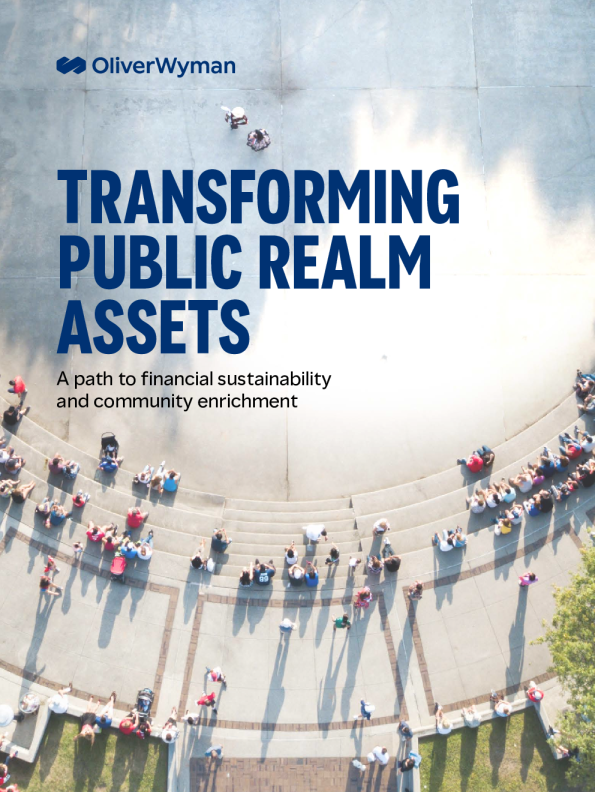
Monetizing underutilized spaces of the publicrealm enables governments to cut operatingexpenses while creating self-sustaining publicassets. With potential forsignificant savingsfor municipal budgets in the GulfCooperationCouncil (GCC),effectivemonetization not only promotesfinancialresilience but alsoenriches resident andvisitor experienceand strengthenscommunityties. © Oliver Wyman— pThe public realm encompassesshared spacesarks, plazas, streets, and waterfronts— where community life thrives, fostering social interaction and providing a vibrant settingfor urban living. Managed by government entities, these spaces are crucial to ensuringinclusivity and high livability standards in cities. Around the globe, improving urban quality oflife has become a priority as nations integrate innovative designs and technologies to craftsustainable, inclusive cities that address global challenges like climate change.However, budget constraints can hamper such efforts. Maintenance and upgrades aredeprioritized, making it harder for these spaces to evolve with their communities’ needs.These challenges, among other considerations, make deploying monetization opportunitiesa compelling solution.Analysis by Oliver Wyman indicates that governments could saveup to8% of their annualmunicipal budgets through monetization strategies in public realm spaces.1Monetizationneed not equate to transforming spaces into profit centers; rather, it focuses on developingself-sustaining assets that ease financial pressures, elevate their intrinsicvalue, and enrichthe community experience.Finding the right balance between financial sustainability and public service is essentialand needs a targeted approach to generate revenue, while preserving the unique qualitiesthat make these spaces valuable.Drawing on analyses by Oliver Wyman together with examples from around the world, thispaper explores the benefits of public realm spaces to the community and identifies six keymonetization levers that the relevant GCC public entities can implement to achieve savingsand enhance user experience. These are:1.Activity-based income generation (including concessions, events, and sports)2.Sponsorship3.Public-Private Partnerships (PPPs)4.Taxes and Levies5.Tokenization6.Business Improvement DistrictsWhile our analysis focuses on governments, private sector entities such as master developersand developers can also capitalize on monetization opportunities. Their approaches may differ,but their goals align with creating appealing public realm spaces that enhance quality of lifeand promote financialresilience.1A benchmarking analysis of entities such as municipalities was done to determine the range of budgets allocated topublic realms. Then data was analyzed from key Gulf countries to extrapolate the share of public realm expenditures,and assess their proportion of the overall government budget. © Oliver Wyman1.A LANDSCAPE OF BENEFITSThe United Nations (UN) Charter of Public Space classifies the ‘public realm’ into fourcategories: Open spaces, streets and circulation spaces, markets, and public facilities(such as libraries and civic centers). This analysis concentrateson:Open SpacesIncluding plazas, gardens and parks filled with greenery, picnic areas, and playgroundsthat invite people of all ages to enjoy the outdoors. These spacesare designed forrecreation and relaxation, and promote sustainability andcommunity.Circulation SpacesThese comprise tree-lined streets where pedestrians and cyclists move seamlesslyalongside vehicles. They are the city’s arteries that ensure efficient navigation andconnectivity while prioritizing safety and accessibility.Compelling benefits that these spaces deliver to communities, cities, and nationsinclude:Quality of LifePublic spaces like parks and plazas promote leisure, exercise, social interaction, andcultural enrichment. They also improve the aesthetics of acity.Economic DevelopmentWell-designed public spaces attract businesses, encourage footfall, and stimulatelocal commerce, all contributing to economicvitality.Environmental StewardshipPublicly accessible green spaces support biodiversity and enhance urban resilienceto environmentalchallenges.Social Equity and InclusionPublic spaces ensure equitable access to gatherings, and cultural and entertainmentopportunities, fostering inclusivity and engagement.Public Service ProvisionThe public realm facilitates essential services and amenities, including biking and walkinglanes, sports facilities, and food and beverage concessions, enhancing connectivity andaccessibility within the community. © Oliver WymanGovernments across the GCC have made strides in improving services in urban centers aspart of their transformative economic diversification plans. Ministries and municipalitieshave launched initiatives to make environments more vibrant and livable. Saudi Arabia’surban green areas have significantly increased with 8,328 gardens and parks spanning161.5 million m2, 5,515 playgrounds, an