AI智能总结
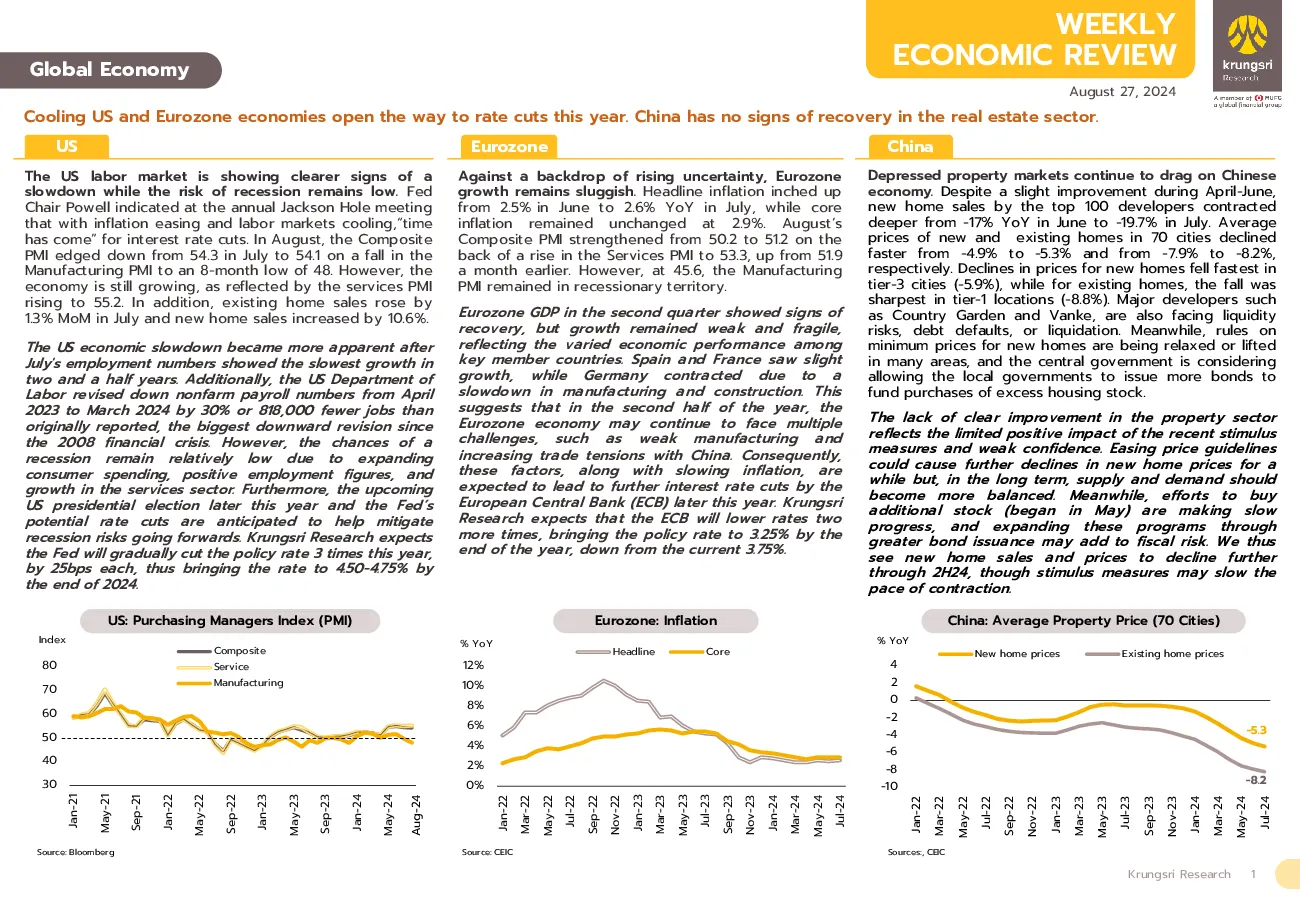
Cooling US and Eurozone economies open the way to rate cuts this year. China has no signs of recovery in the real estate sector. US China Eurozone Depressed property markets continue to drag on Chineseeconomy.Despitea slight improvement during April-June,newhome sales by the top 100 developers contracteddeeper from-17% YoY in June to-19.7% in July.Averageprices of new andexisting homes in70 cities declinedfasterfrom-4.9%to-5.3%and from-7.9%to-8.2%,respectively. Declines in prices for new homes fell fastest intier-3cities (-5.9%), while for existing homes, the fall wassharpest in tier-1 locations (-8.8%). Major developers suchasCountry Garden and Vanke,are also facing liquidityrisks,debt defaults,or liquidation.Meanwhile,rules onminimum prices for new homes are being relaxed or liftedin many areas, and the central government is consideringallowingthe local governments to issue more bonds tofund purchases of excess housing stock. TheUS labor market is showing clearer signs of aslowdown while the risk of recession remains low.FedChair Powell indicated at the annual Jackson Hole meetingthat with inflation easing and labor marketscooling,“timehas come”for interest rate cuts. In August, the CompositePMI edged down from54.3in July to54.1on a fall in theManufacturing PMI to an8-month low of48. However, theeconomy is still growing, as reflected by the services PMIrisingto 55.2.In addition,existing home sales rose by1.3% MoM in July and new home sales increased by10.6%. Against a backdrop of rising uncertainty, Eurozonegrowth remains sluggish.Headline inflation inched upfrom2.5%in June to 2.6%YoY in July,while coreinflationremainedunchangedat2.9%.August’sComposite PMI strengthened from50.2to51.2on theback of a rise in the Services PMI to53.3, up from51.9a month earlier. However, at45.6, the ManufacturingPMI remained in recessionary territory. Eurozone GDP in the second quarter showed signs ofrecovery,but growth remained weak and fragile,reflecting the varied economic performance amongkey member countries. Spain and France saw slightgrowth,whileGermanycontractedduetoaslowdownin manufacturing and construction.Thissuggeststhat in the second half of the year,theEurozoneeconomy may continue to face multiplechallenges,suchasweakmanufacturingandincreasing trade tensions with China. Consequently,thesefactors,along with slowing inflation,areexpected to lead to further interest rate cuts by theEuropean Central Bank (ECB) later this year. KrungsriResearch expects that the ECB will lower rates twomore times, bringing the policy rate to3.25% by theend of the year, down from the current3.75%. The US economic slowdown became more apparent afterJuly's employment numbers showed the slowest growth intwo and a half years. Additionally, the US Department ofLabor revised down nonfarm payroll numbers from April2023to March2024by30% or818,000fewer jobs thanoriginally reported, the biggest downward revision sincethe2008 financial crisis.However,the chances of arecessionremain relatively low due to expandingconsumerspending,positive employment figures,andgrowth in the services sector. Furthermore, the upcomingUSpresidential election later this year and the Fed’spotentialrate cuts are anticipated to help mitigaterecession risks going forwards. Krungsri Research expectsthe Fed will gradually cut the policy rate3times this year,by25bps each, thus bringing the rate to 4.50-4.75% bythe end of2024. The lackof clear improvement in the property sectorreflects the limited positive impact of the recent stimulusmeasuresandweak confidence. Easing price guidelinescould cause further declines innew home prices for awhile but, in the long term, supply and demand shouldbecomemore balanced.Meanwhile,efforts to buyadditionalstock(began in May)are making slowprogress,and expanding these programs throughgreater bond issuance may add to fiscal risk. We thusseenew home sales and prices to decline furtherthrough2H24, thoughstimulus measures may slow thepace of contraction. MPC may leave policy rate unchanged through2024. Changes to digital wallet policy likely to facilitate initial payments this year. It is increasingly probable that the new governmentwillmake changes to its flagship digital walletpolicy,and this year,payments will likely betargetedat the most vulnerable parts of society.According to Thaksin Shinawatra, ex-prime ministerandfatherofthecurrentPMPaetongtarnShinawatra, payments totaling THB145bn, which willbe funded by additional FY2024budget worth THB122bn and over THB20bn from central governmentbudget, may now be made directly to welfare cards’holders.This would then allow the authorities totarget the14.5m individuals currently most in need offinancial help. The MPC has decided by a majority vote to maintainpolicyrate,citing the economy is performing asexpected,though the worsening credit qualityrequires ongoingmonitoring.With the economy ontracktomeetforecasts,theMonetaryPolicyCommittee (MPC) voted6to1to keep policy rates at2.50% at its