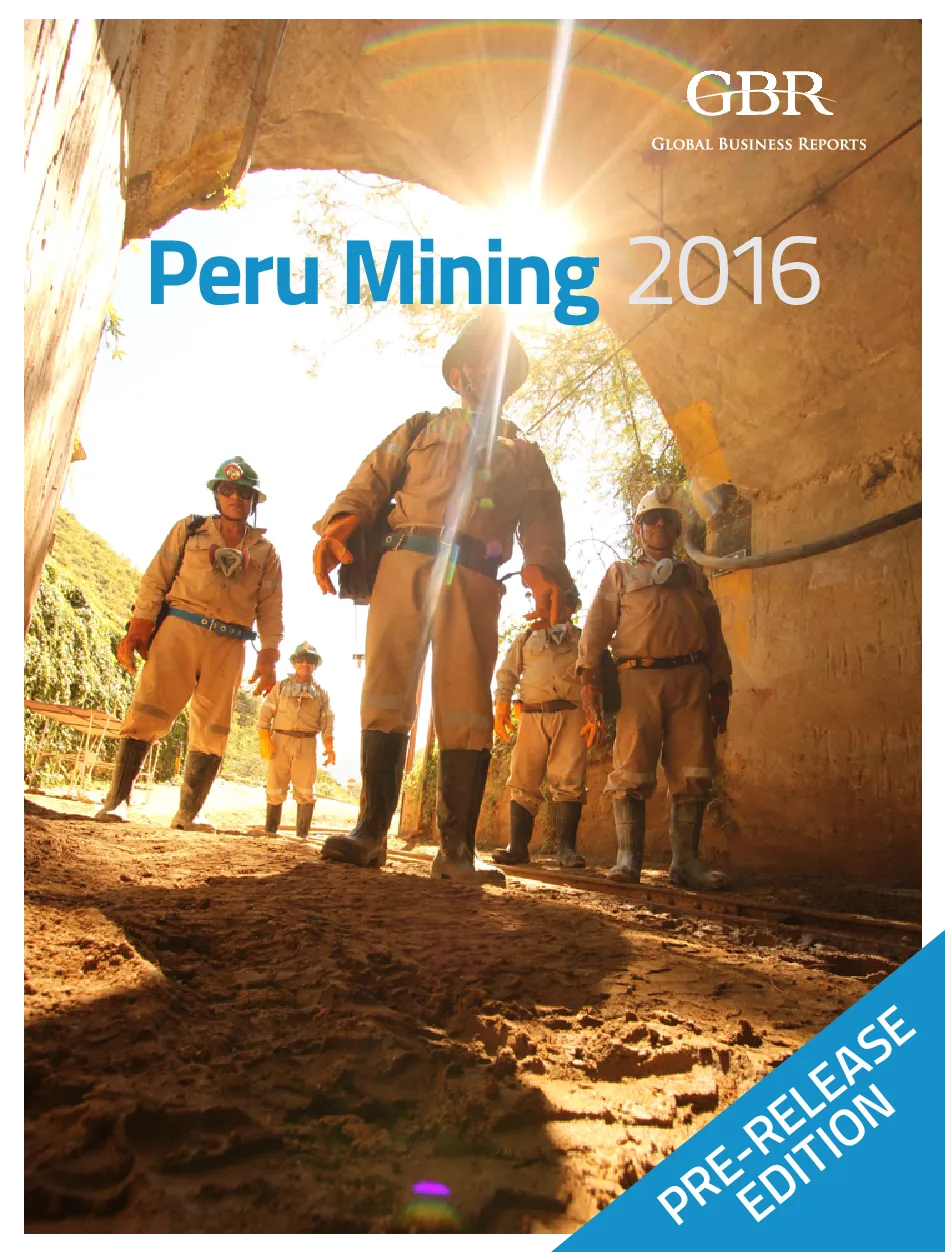
Peru's mining industry has experienced significant growth, consolidating its position as the world's second largest copper producer. However, the industry faces challenges in maintaining momentum due to social conflicts, low metal prices, and a lack of new project development.
Key points:
- Production growth: Copper production surged in 2015, reaching 1.7 million mt/y, with expectations of 2.3 million mt/y in 2016. Gold production also increased after three years of decline, reaching 4.66 million oz/y. Silver, zinc, lead, and molybdenum production saw positive growth, while tin and iron experienced declines.
- Project development: Total mining investments in Peru were $7.5 billion in 2015, but are expected to decline to $5.3 billion in 2016. The only major capital project this year is the expansion of Southern Copper's Toquepala operation. Several large copper projects are in the pipeline but require positive investment decisions and social licenses to come online.
- Industry challenges: Social conflicts have led to the suspension of major projects like Conga and Tía María. The industry is also facing low metal prices, which have caused mining companies to restructure and rationalize their investment pipelines.
- Cost efficiency: Peru's mining companies have focused on cost reduction and operational efficiency. Companies like Hochschild Mining and Gold Fields have implemented innovative strategies to maximize free cash flow.
- Exploration: While exploration budgets have decreased globally, Peru received 6% of all exploration dollars in 2015, partly due to the importance of underground mining and the country's perceived advantages in geology and legal stability.
- Junior companies: The lack of funds has impacted the junior mining segment, forcing companies to explore alternative financing models and focus on smaller deposits.
- Equipment providers: Mining equipment manufacturers are adapting to the changing market by offering smaller, more efficient machines and focusing on after-market solutions. Companies like Caterpillar, Komatsu, and Volvo are key players in the Peruvian market.
- Environmental management: The Samarco disaster in Brazil has highlighted the importance of environmental management in the mining industry. Companies are increasingly investing in innovative technologies and solutions to ensure the sustainability of their operations.
- Safety: Peru's mining safety regulations have improved, leading to a decrease in fatalities. However, the industry still faces challenges in fostering a strong safety culture and implementing new technologies due to cost constraints.
- Community relations: The mining industry is increasingly recognizing the importance of community relations and social development. Multi-actor mechanisms and collaborative approaches are being adopted to address social concerns and ensure the long-term success of mining projects.