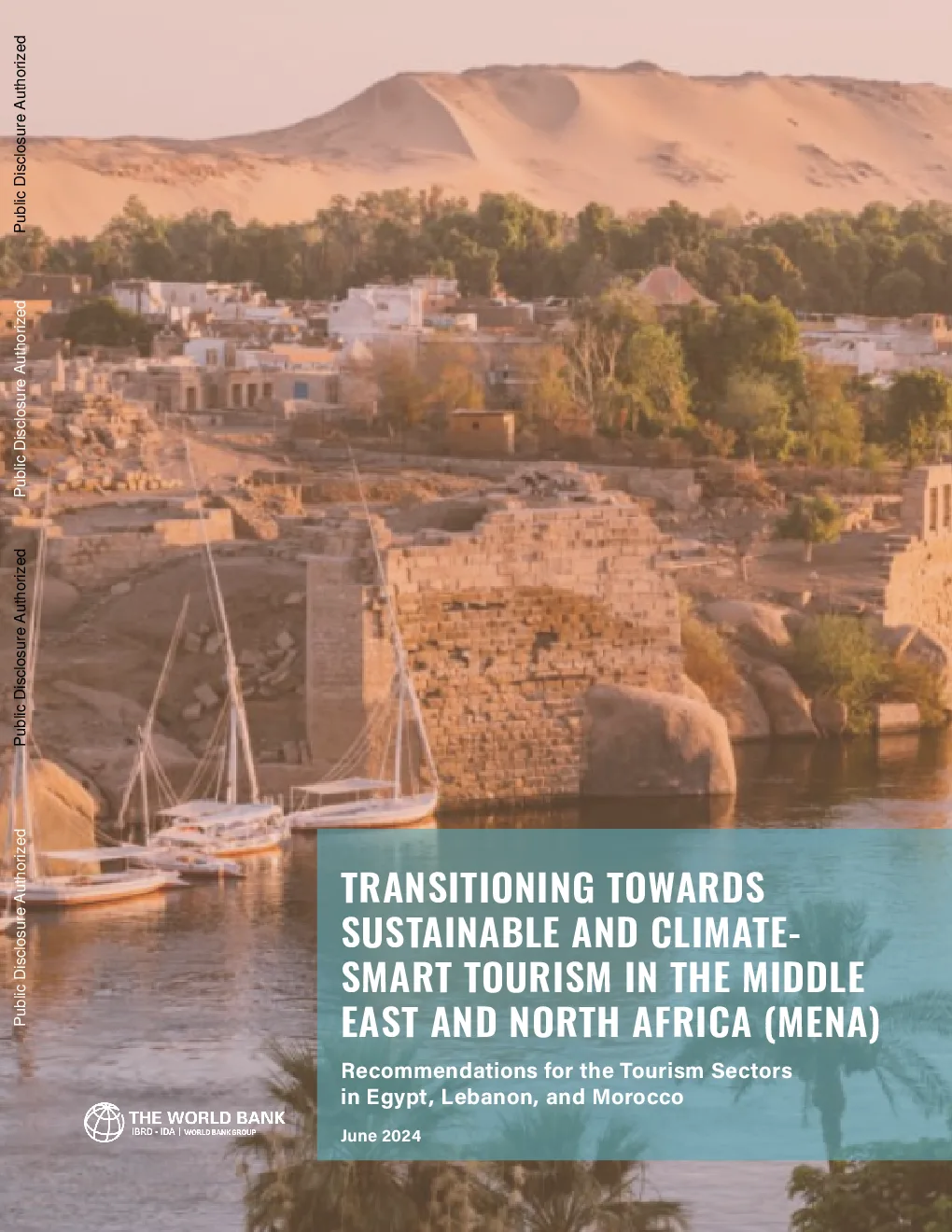
Transitioning Towards Sustainable and Climate-Smart Tourism in the Middle East and North Africa (MENA) Report
Summary:
The report focuses on developing recommendations for the tourism sectors in Egypt, Lebanon, and Morocco, aiming to transition towards sustainable and climate-smart tourism practices. It emphasizes the need for adaptation strategies to address climate change impacts, leveraging tourism as a catalyst for territorial development, and enhancing data infrastructure for better management of the sector.
Key Findings:
-
Climate Change Risks for Tourism: The report highlights significant climate change risks for the tourism sector, including water shortages, rising temperatures and droughts, sea-level rise, and coastal erosion. These factors exacerbate the vulnerability of the tourism industry, particularly due to concentrated and seasonal tourism products, potential job losses during shocks, and limitations in data availability.
-
Tourism as a Lever for Regional Development: Tourism is identified as a critical driver for economic growth, job creation, and economic diversification in the MENA region. It is particularly important for economies experiencing external shocks and crises. The report suggests that tourism has the potential to serve as a catalyst for territorial development and to improve the livelihoods of local communities.
-
Recommendations for Adaptation and Development:
- Adaptation to Climate Change Impacts: The report recommends adapting the tourism industry to mitigate the effects of climate change, ensuring long-term viability.
- Inclusive Territorial Development: Utilizing tourism as a tool to promote balanced development across regions, focusing on resource efficiency and environmental sustainability.
- Enhanced Data Infrastructure: Building robust data systems to support informed decision-making, monitoring, and evaluation of tourism impacts and effectiveness in addressing climate change.
-
Country-Specific Strategies: The report provides detailed recommendations tailored to the unique circumstances of Egypt, Lebanon, and Morocco, focusing on strategies like improved infrastructure, sustainable practices, and enhanced policy dialogue to foster climate-smart and sustainable tourism.
-
Economic and Environmental Dividends: It underscores the potential for increased economic benefits and environmental conservation through strategic tourism development, highlighting case studies and examples from previous World Bank experiences in tourism development.
-
Legal and Licensing Considerations: The report includes guidelines for the use, translation, and adaptation of its content, emphasizing the Creative Commons Attribution 3.0 IGO license and detailing permissions and liability considerations for reusing components of the work.
In conclusion, the report advocates for a comprehensive approach to tourism development in the MENA region that integrates sustainability and resilience to climate change, aiming to maximize economic benefits while protecting the environment and fostering equitable development across territories.