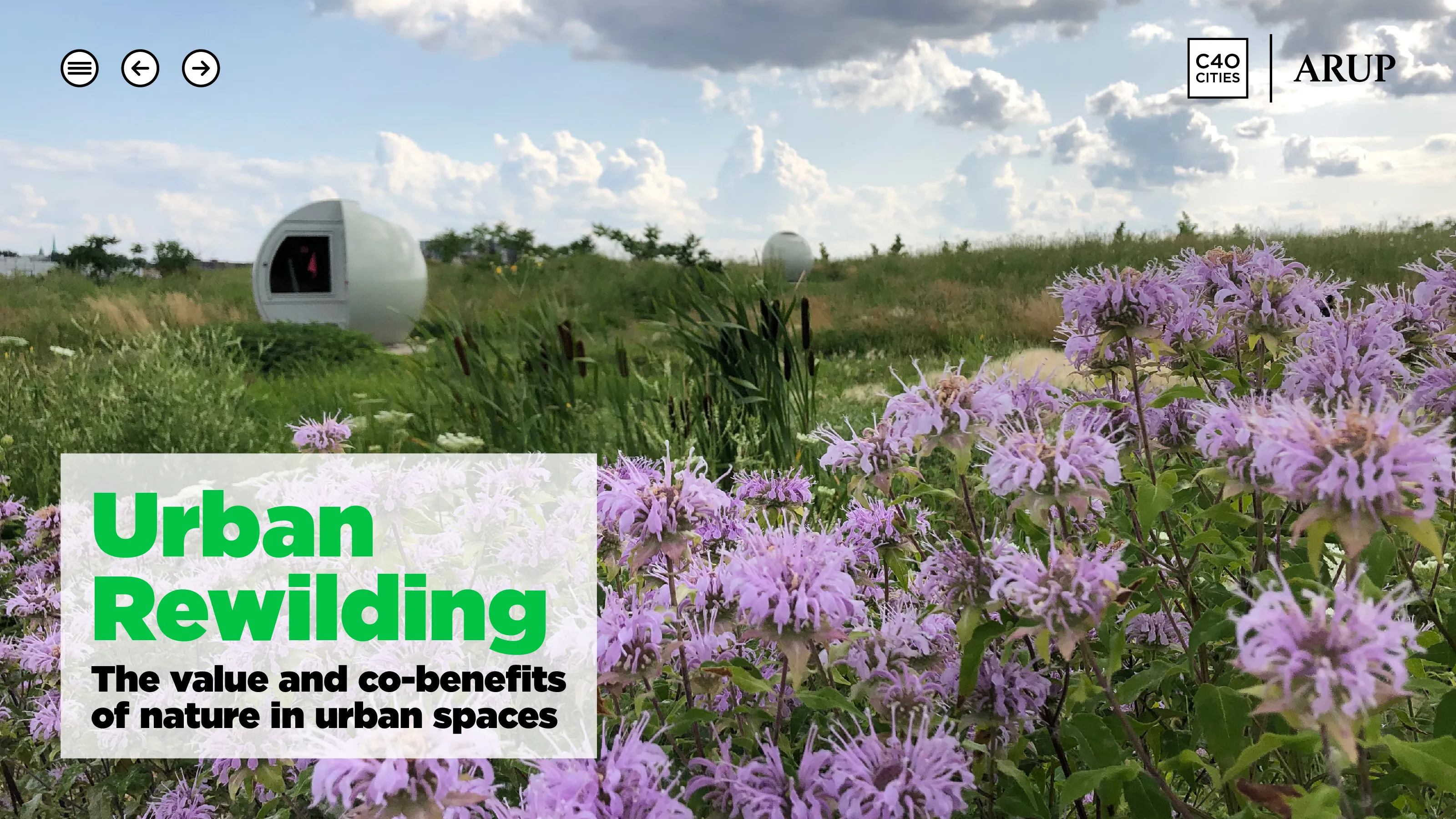
Urban Rewilding: the value and co-benefits of nature in urban spaces
The value and co-benefitsof nature in urban spaces Contents Preface..................................................................................................................3Executive Summary.........................................................................................5Acknowledgements.........................................................................................6Introduction........................................................................................................ 7Delivering urban rewilding...........................................................................21Urban rewilding case studies.................................................................... 24Conclusion........................................................................................................ 56Appendix: Interviews and References................................................... 59 Preface As this report shows, city leaders can learn from eachother on how we can do more. At the most recent UNBiodiversity Conference (COP15), I signed the MontrealPledge on Cities United in Action for Biodiversity ledby Mayor Plante, which includes 15 actions that citieswill take to reduce threats to biodiversity. Through thisinitiative and C40’s Urban Nature Accelerator, I lookforward to sharing lessons from London and learningfrom other cities. Cities have the potential to be ideal homes for excitingwildlife and host thriving habitats if we are willing totake on the challenge before us. In London, we are atthe forefront of this effort. Since 2016, we have investedmore than £28 million in green space and tree plantingprojects, including a Rewild London Fund, which willrestore or create over 365 hectares for plants and animalsto thrive. The results will be felt by all Londoners: cleanerrivers to swim in, safer air to breathe, and the joy ofsharing our city with more beavers and bugs, bees andbats! Nature sustains life on earth. It alsoinfluences all aspects of our lives, fromthe food and water we consume to ourhealth and well-being, and this is as truein cities as it is in rural areas. But natureis under threat as never before. As C40 Chair, I would like to extend my sincerest thanksto everyone involved for demonstrating once again thatcities are doers, not delayers. Our collective efforts toprotect nature and address the biodiversity crisis are atemplate for nations to follow and will help ensure theviability of our planet for future generations. Despite the progress we have made, I am acutely awarethat more needs to be done to tackle the ecologicalemergency, which is why I brought together the LondonRewilding Taskforce to explore more opportunities torewild our city. By identifying large-scale spaces where,with help, nature can recover and by encouragingLondoners to engage with the natural environmentaround them, we can go further and faster. “Since 2016, we have investedmore than £28 millionin green space and treeplanting projects, includinga Rewild London Fund,which will restore or createover 365 hectares for plantsand animals to thrive.” Sadiq KhanMayor of London Preface In Montréal, we are accelerating the ecological transitionby putting biodiversity, as well as green and blue spaces,at the heart of our decision-making. The city’s strategicplan, Montréal 2030, our Climate Plan and our Nature andSports Plan concretely support this through targeted andlarge-scale actions. As Mayor of Montréal, C40 SteeringCommittee Member and Vice Chairfor Urban Nature, I am delighted bythe release of this report on urbanrewilding. Protecting and nurturingurban nature is key to ambitiousclimate action. Urban rewilding projects and nature-based solutionsare key to fighting biodiversity loss and respond to theclimate crisis while promoting human health and well-being. Both large-scale projects and targeted initiativescan have co-benefits that go beyond access to green andblue spaces. We need to let nature lead! Cities are full ofgreat initiatives. I am thrilled that this report will allowsome of them to shine and, hopefully, inspire others. At the COP 15 in December of 2022, the internationalcommunity adopted the historic Kunming-MontréalGlobal Biodiversity Framework (GBF). Cities and localgovernments have once again recognised the urgency toimplement this GBF. The clock is ticking. To streamline efforts, Montréal has invited cities fromacross the globe to make a commitment to protectingbiodiversity through fifteen tangible actions. Dozens ofcities from all over the world have accepted the challengeand signed the Montréal Pledge. Valerie PlanteMayor of Montréal “At the COP 15, in Decemberof 2022, the internationalcommunity adopted thehistoric Kunming-MontréalGlobal BiodiversityFramework (GBF).” Executive Summary Transformational change in urban areas is crucial to reversingbiodiversity loss and tackling the climate crisis. Cities areincreasingly experiencing ecological degradation, often madewor